Art Monthly 499
September 2026
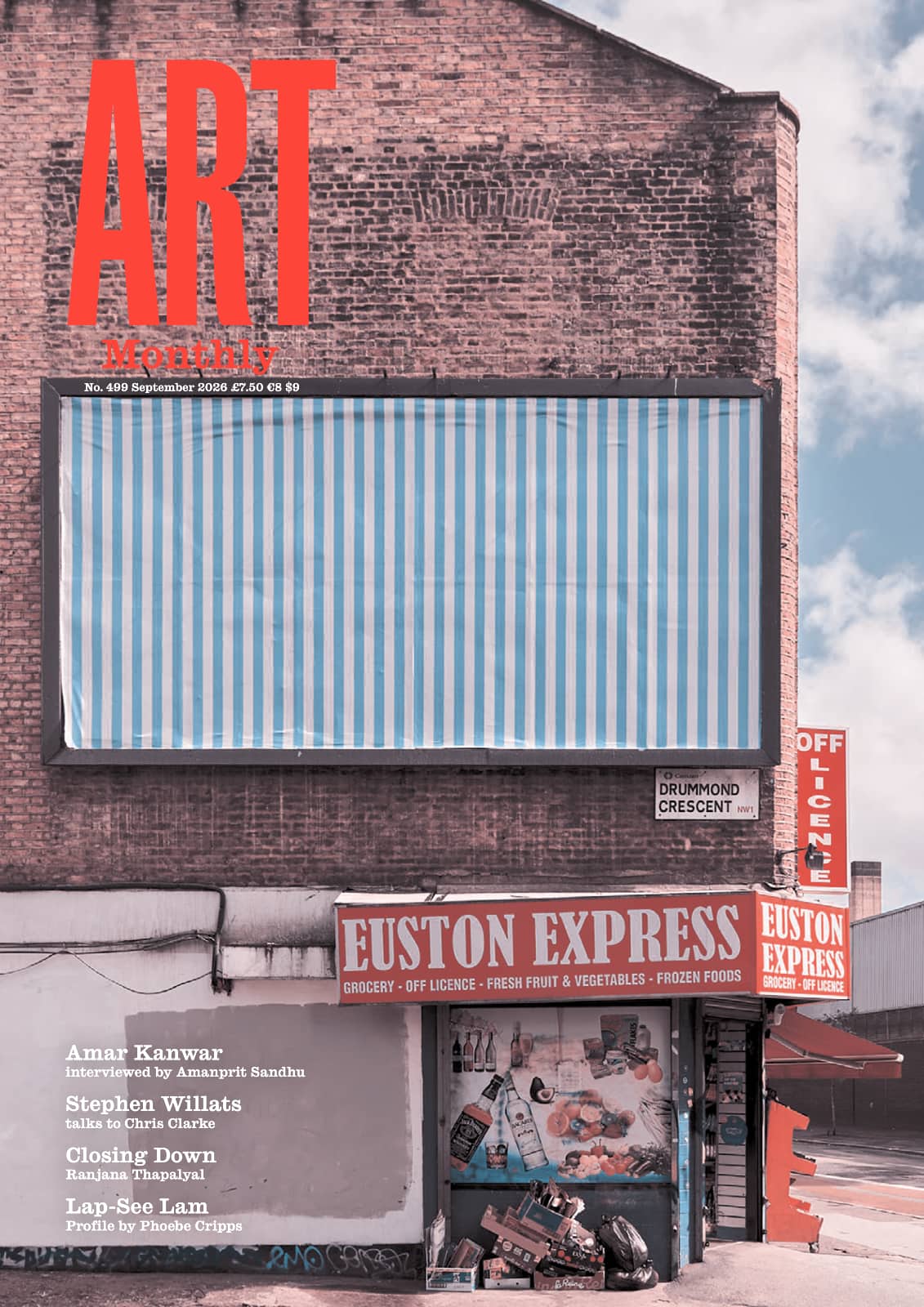
Amar Kanwar
interviewed by Amanprit Sandhu
Stephen Willats
talks to Chris Clarke
Closing Down
Ranjana Thapalyal
Lap-See Lam
Profile by Phoebe Cripps
Buy Now – select:
Want to read this right now?
Get instant access to the entire back catalogue via Exact Editions from only £8.99!
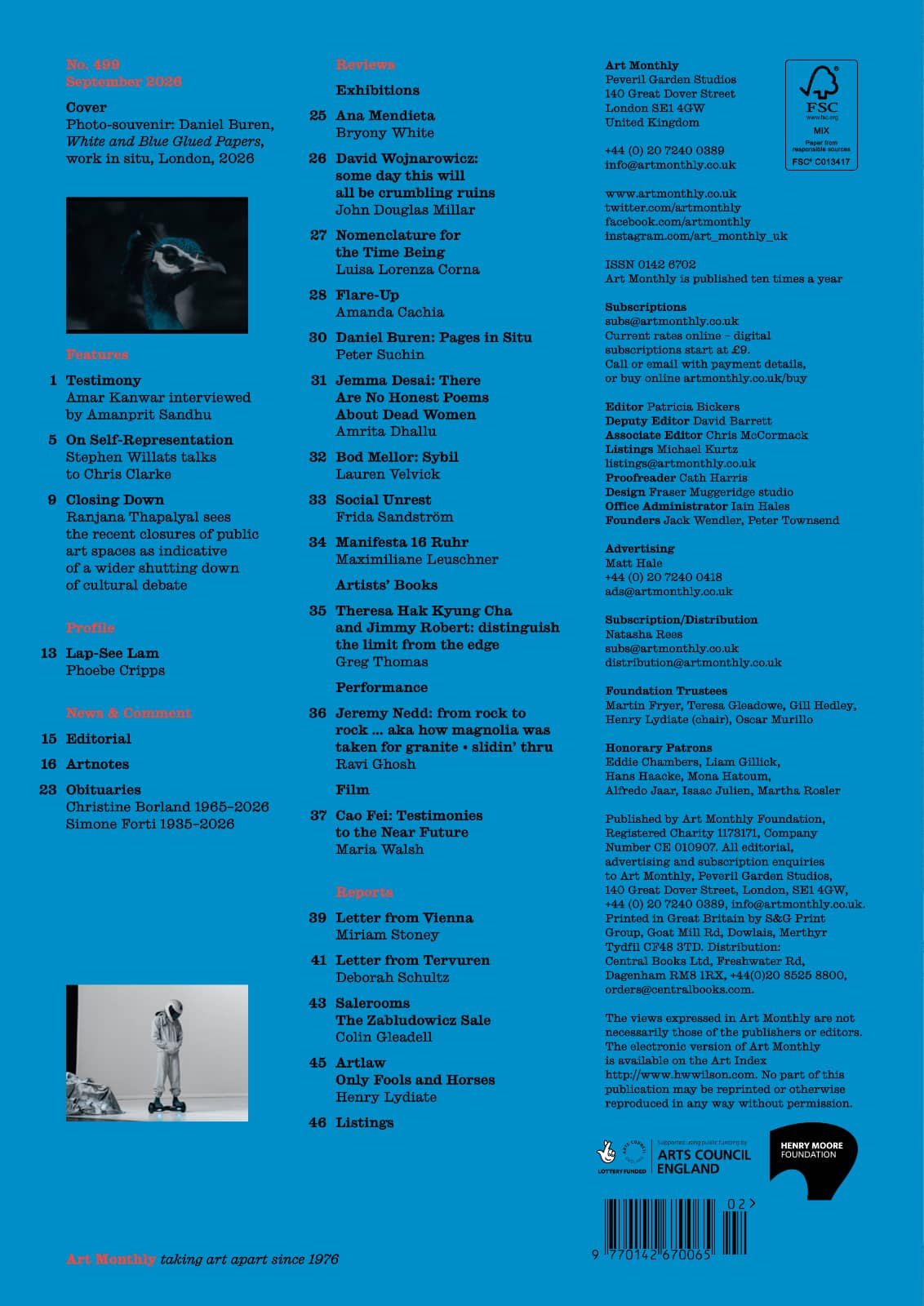
Contents
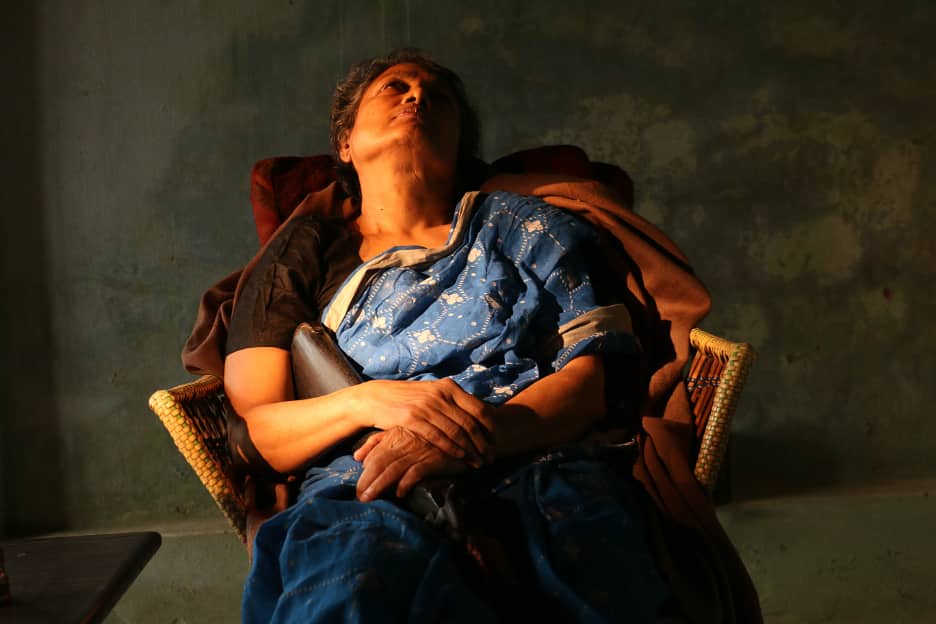
Amar Kanwar, Such a Morning, 2017
Interview
Testimony
Amar Kanwar interviewed by Amanprit Sandhu
All politics, theories, legal struggles, advocacy and activism emerge from the lived experience of people. Sometimes human experience is condensed, summarised or pushed away and we are left only with ideological or technical discussions and arguments. Testimonies help us bring the lived experience of people back into the centre of discussion.
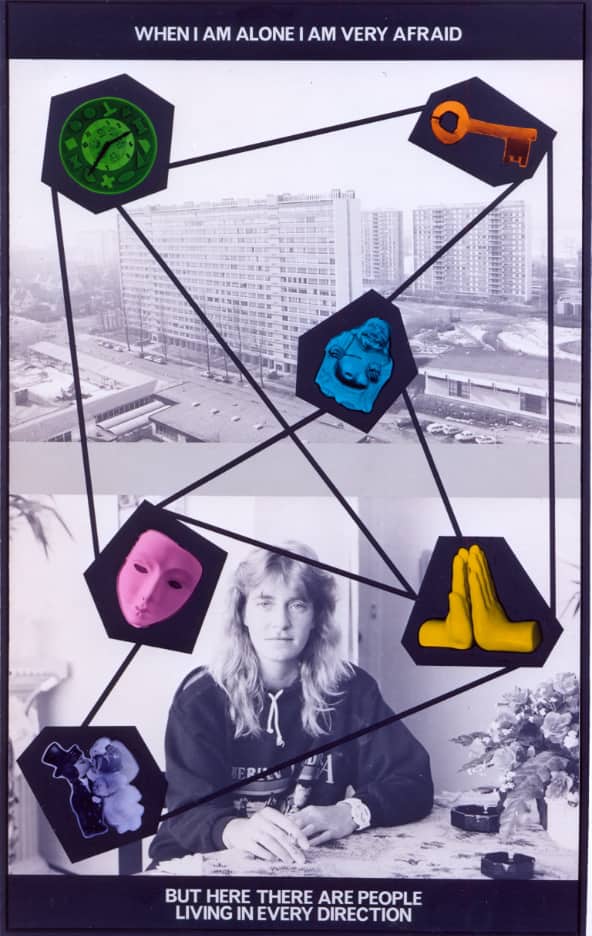
Stephen Willats, Concrete Window, 1991
Feature
On Self-Representation
Stephen Willats talks to Chris Clarke
I realised that you had to use the language of the audience. That was one way forward. So, I decided to go beyond the art institution directly into the fabric of society and to operate with people living in environments which were more typical of the world we lived in.
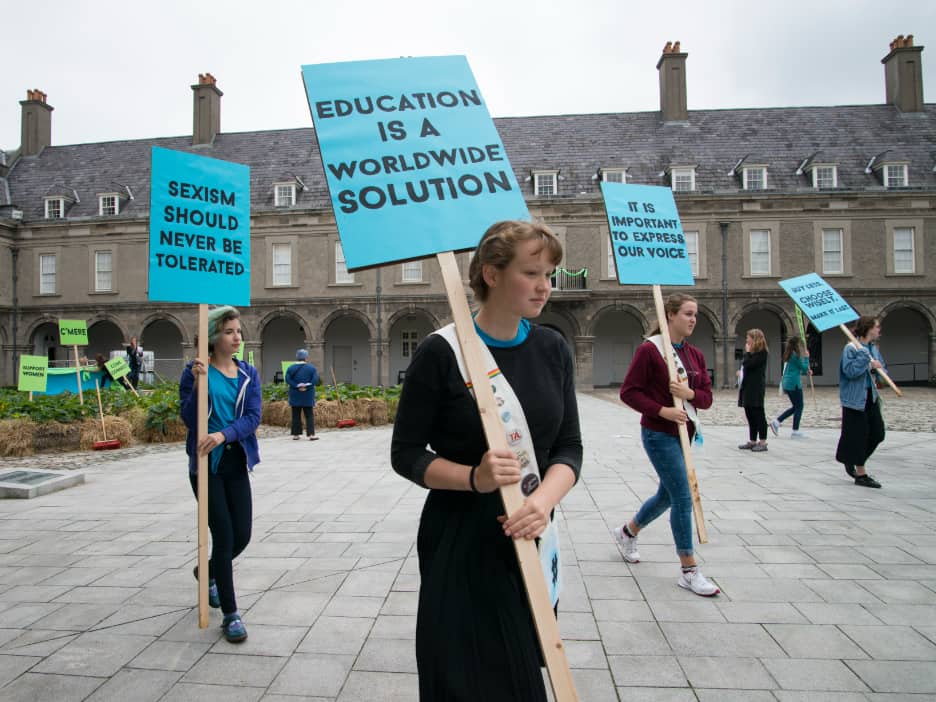
Suzanne Lacy, School of Revolutionary Girls, 2024
Feature
Closing Down
Ranjana Thapalyal sees the recent closures of public art spaces as indicative of a wider shutting down of cultural debate
While a direct correlation between the closure of art spaces and the rise of far-right presence in our streets is not suggested, the connections between the underlying causes must be addressed. An economic paradigm that pushes institutions of governance and education into a culture of cut-throat, profit-driven single-mindedness does the same harm to art and education as it does to the social fabric in general.
 |
From the Back Catalogue |
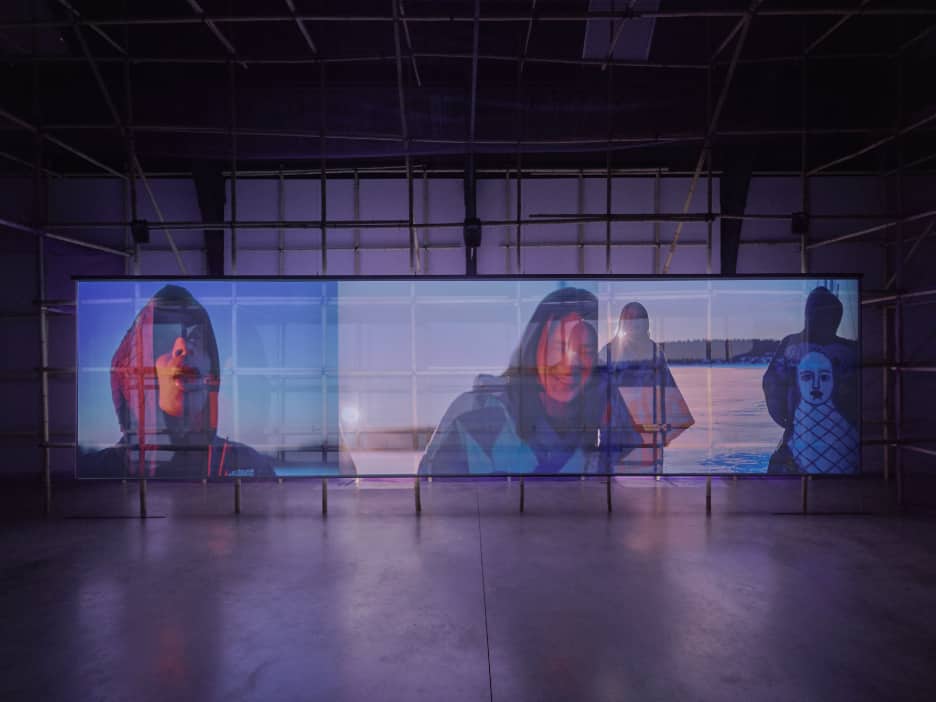
Lap-See Lam, Floating Sea Palace, 2024
Profile
Lap-See Lam
Phoebe Cripps
Lap-See Lam grew up in a restaurant in Stockholm, the Bamboo Garden, which was opened by her grandmother in the 1970s before her parents took over. The artist has spoken about spending her childhood watching her parents perform someone else’s image of China.
Editorial
The Sleep of Reasoning
Days before many of us donned blacked glasses to view the majestic solar eclipse, the world’s richest man accidentally crashed a rocket into the moon. Clearly, the insatiable appetite of capitalism has driven our attention economy – now AI economy – into a death spiral, and we’ll need more than dark glasses to protect us from this spectacle of excess.
Is it too late for us to reset, to abandon our contemporary lifestyle and tap into a more ancient and respectful relationship with our planet, to regain the ability to listen to our body clocks and embrace our circadian rhythms and ‘go paleo’?
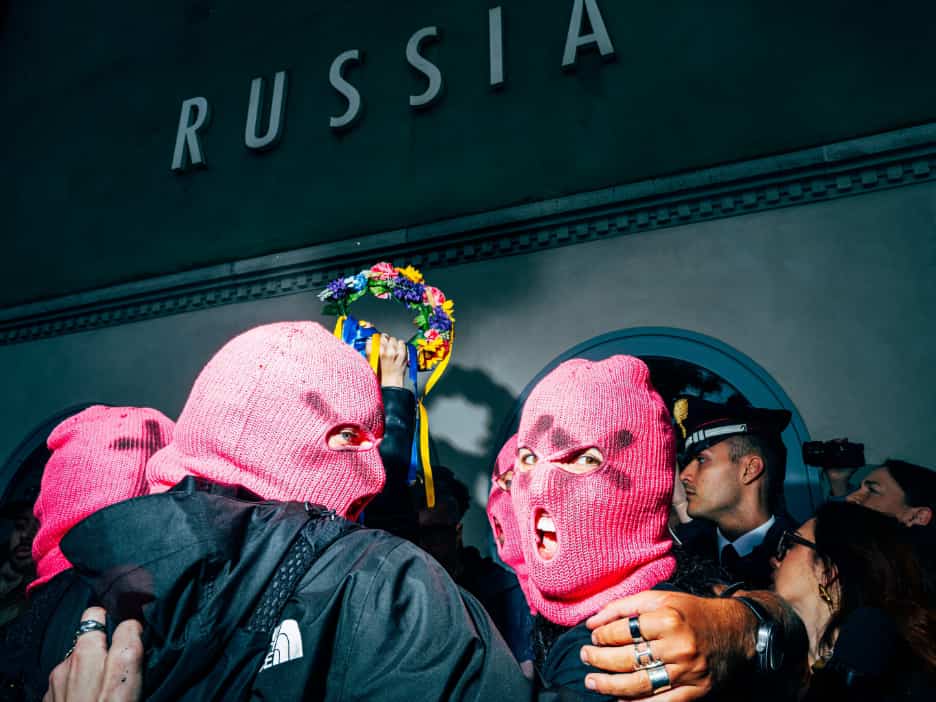
Pussy Riot protesting Russia’s inclusion in this year’s Venice Biennale, which resulted in a loss of European funding for the Biennale
Artnotes
Climate Emergency
The summer’s relentless heatwaves were felt in the arts sector; as ACE turns 80, outgoing chair Nicholas Serota outlines his priorities for the arts; the museum sector’s international code of ethics is published; the Venice Biennale loses European funding over its inclusion of Russia this year; Russia targets airstrikes on Ukrainian cultural institutions; cultural institutions are advised over safeguarding at a time when criminals use GenAI to exploit children; plus the latest on galleries, people, prizes and more.
Obituaries
Christine Borland 1965–2026
Katrina M Brown
Simone Forti 1935–2026
Fiontán Moran
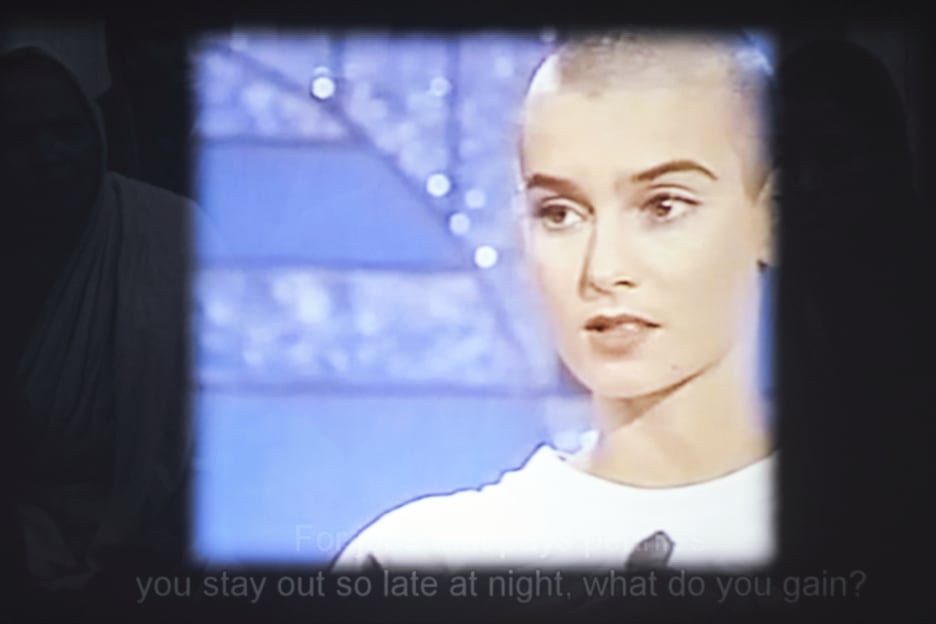
Jemma Desai, There Are No Honest Poems About Dead Women, 2026, Somerset House Studios
Exhibitions
Ana Mendieta
Tate Modern, London
Bryony White
David Wojnarowicz: some day this will all be crumbling ruins
The Modern Institute, Glasgow
John Douglas Millar
Nomenclature for the Time Being
Raven Row, London
Luisa Lorenza Corna
Flare-Up
Goldsmiths CCA, London
Amanda Cachia
Daniel Buren: Pages in Situ
Lisson Gallery, London
Peter Suchin
Jemma Desai: There Are No Honest Poems About Dead Women
Somerset House Studios, London
Amrita Dhallu
Bod Mellor: Sybil
Moon Groove, Manchester
Lauren Velvick
Social Unrest
Matta, Milan
Frida Sandström
Manifesta 16 Ruhr
various venues, Duisburg, Essen, Bochum and Gelsenkirchen
Maximiliane Leuschner
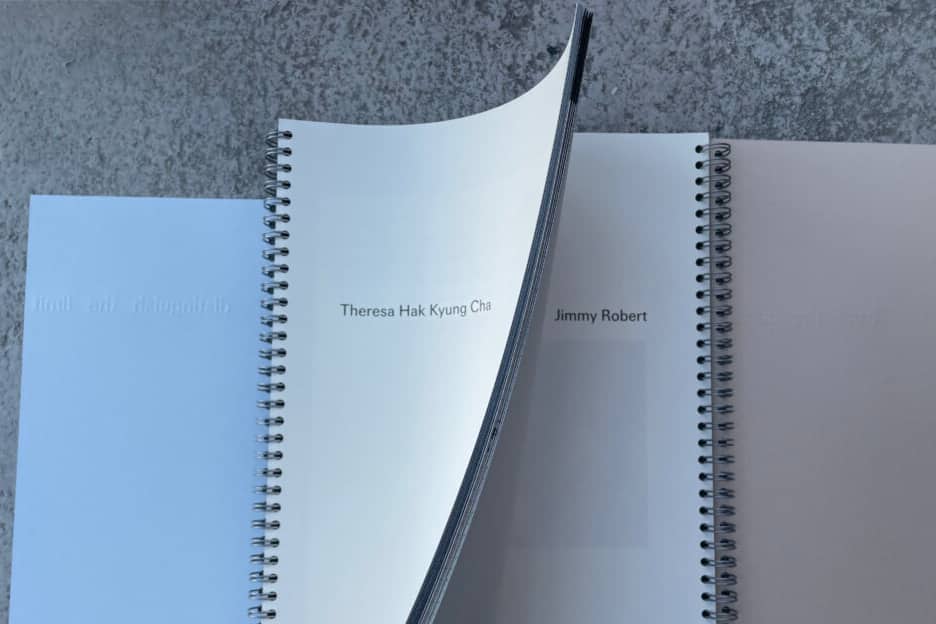
distinguish the limit from the edge
Artists’ Books
Theresa Hak Kyung Cha and Jimmy Robert: distinguish the limit from the edge
Greg Thomas
These works on graph paper by Theresa Hak Kyung Cha, such as Untitled (Après tu parti), 1976, perhaps predict the spirit of the grid as defined by Rosalind Krauss in 1979: emblem of both formalist monomania and reverie.
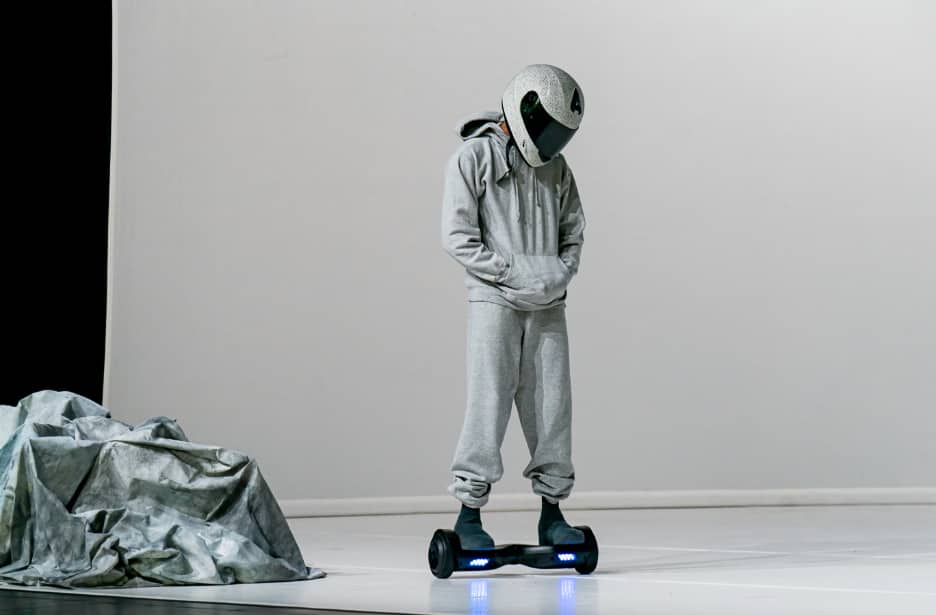
Jeremy Nedd, from rock to rock ... aka how magnolia was taken for granite, 2024/26
Performance
Jeremy Nedd: from rock to rock … aka how magnolia was taken for granite • slidin’ thru
Ravi Ghosh
By the time the hoverboard character appears, chaos has been embraced: limbs pull at the air overhead, the dancer in the silver sleeping bag – previously writhing – has settled to become another boulder.
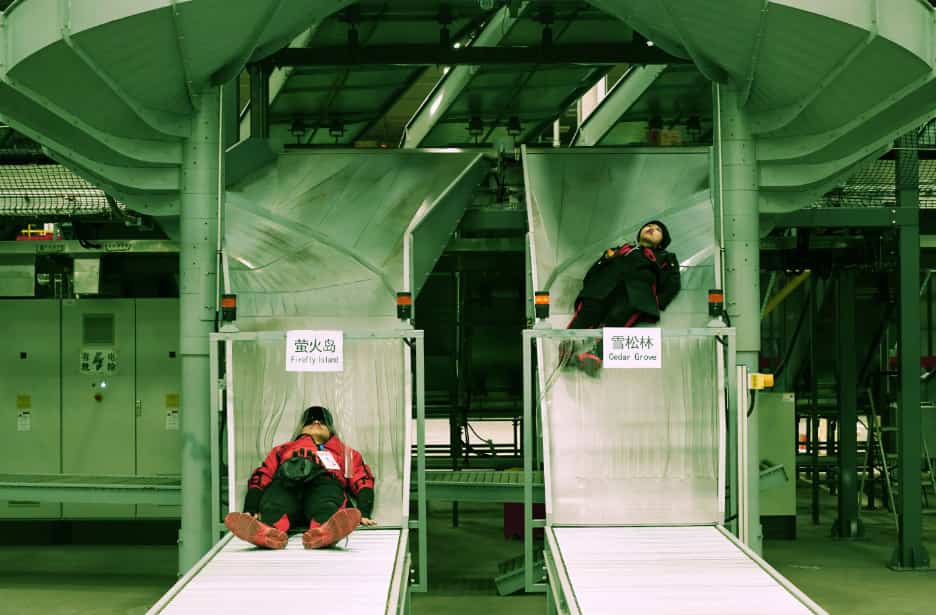
Cao Fei, Asia One 02, 2018, from ‘Asia One’ series
Film
Cao Fei: Testimonies to the Near Future
Maria Walsh
‘Testimonies to the Near Future’ is ultimately a feat of technological and designer prowess that envisages the accelerated times and spaces of globalisation and gentrification sweetened by romance and play.
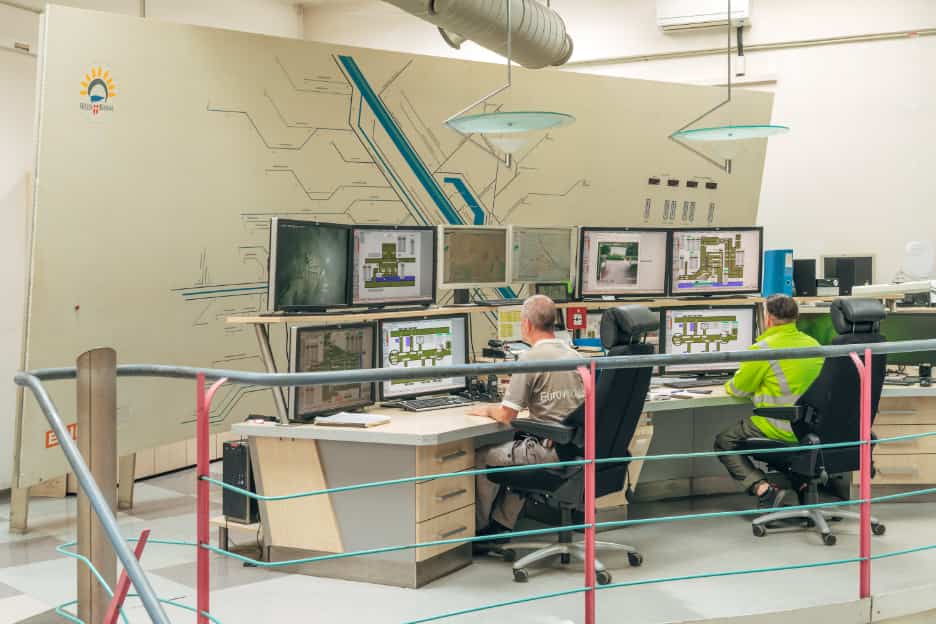
engineers looking after ‘The Donauinsel’, 2026, photo by Klaus Pichler
Reports
Letter from Vienna
Miriam Stoney
The various ideas for the Danube Island’s use and the ultimate decision to retain the newly created land for ecological conservation and recreational activities provide a rare instance of politics working to affirm life, as opposed to more abstract values such as capital, status or power. It’s still propaganda, but at least benevolently so.
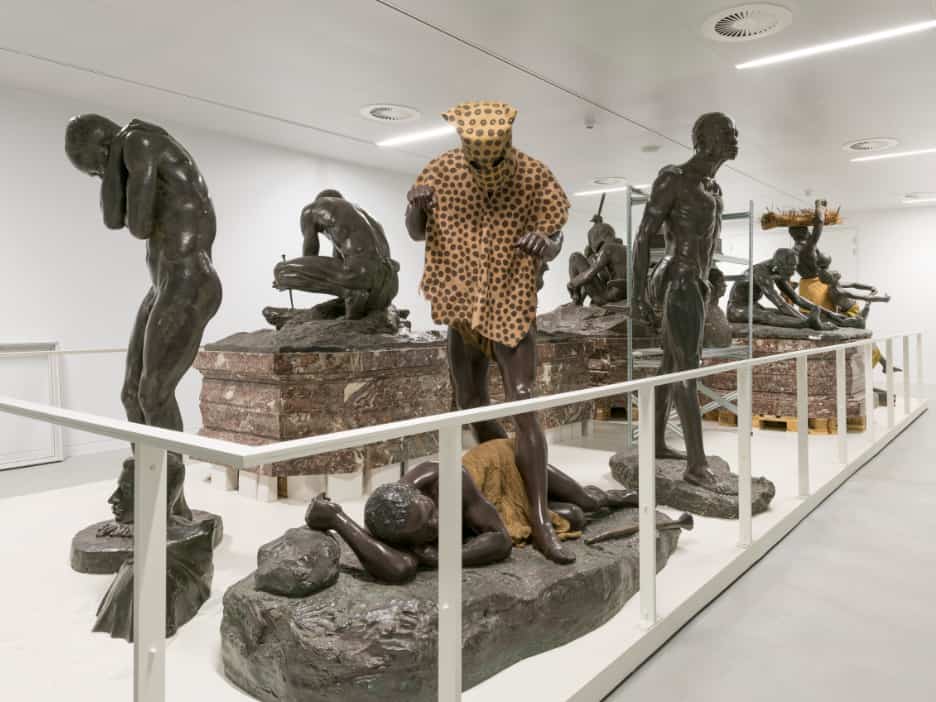
AfricaMusuem’s introductory galleries
Reports
Letter from Tervuren
Deborah Schultz
The range of names that Belgium’s AfricaMuseum has been known by over the years seem indicative of how it has responded to wider political and historical changes while uncertain of its role in society. I have long been interested to see how its displays deal with its complex and highly problematic history. How does it look to its past? To what extent does it engage with the present?
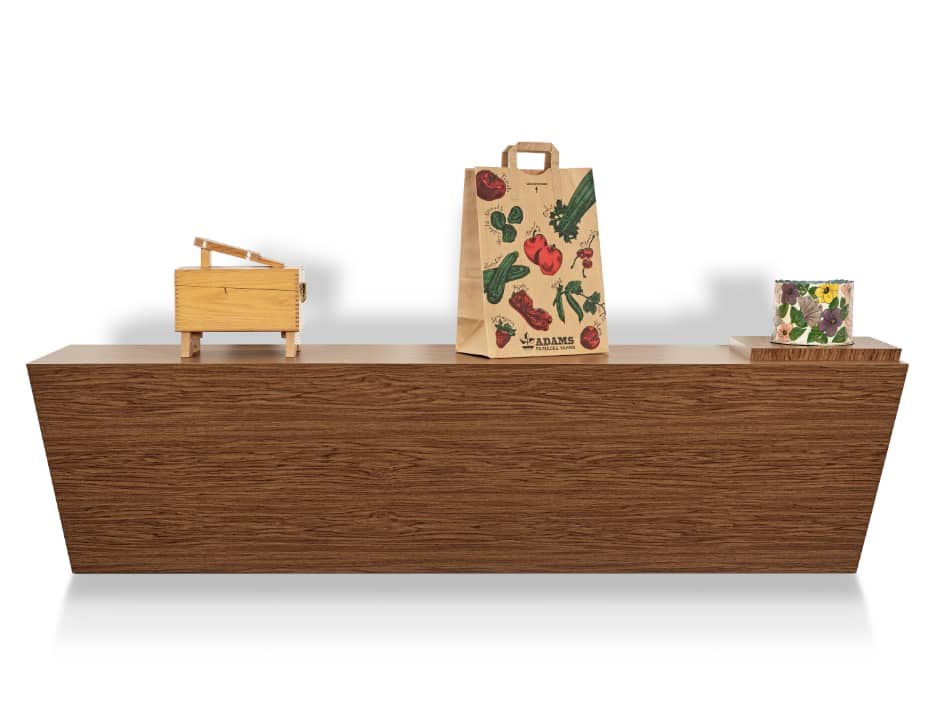
Haim Steinbach, family ties, 2007, estimate £10,000–15,000, sold for £1,270
Salesrooms
The Zabludowicz Sale
Colin Gleadell
While the big money in London this summer was focused on Sotheby’s, contemporary art followers had their eyes on Christie’s, which was the beneficiary of the surprise decision by Anita and Poju Zabludowicz to sell more than 100 works from their collection with an estimated value of £15m.
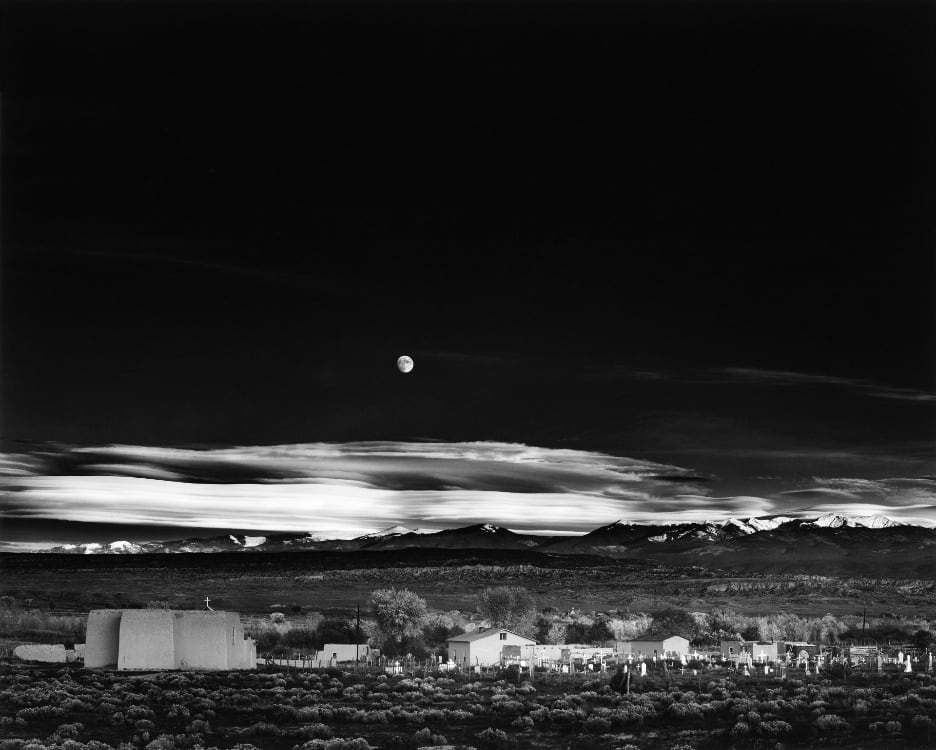
Ansel Adams, Moonrise, Hernandez, New Mexico, 1941
Artlaw
Only Fools and Horses
Henry Lydiate
US-based photography dealer James Danziger used GenAI to make a ‘colourized’ version of Ansel Adams’s iconic Moonrise, Hernandez, New Mexico, 1941, then displayed it at The Photography Show’s annual fair in New York City. Danzinger offered his creation for sale in three differently sized editions of ten at $6,000, $8,000 and $10,000; the Ansel Adams Gallery, meanwhile, run by the artist’s grandson, was offering a unique print of the original Moonrise for over $100,000.








Peveril Garden Studios
140 Great Dover Street
London SE1 4GW
United Kingdom
Email info@artmonthly.co.uk